What the FCA found on AI in financial services, and the three points that stood out to me.
I've spent a lot of time using AI to automate my own business processes, and I believe there's a huge opportunity for financial services to do some incredible things with it, especially around financial inclusion. It gets me excited and gets my brain whirring.
So I was glad to finally get around to reading the FCA's AI in financial services: good practice and areas for improvement, published on 19 October 2026. I'm slightly late to the party, but if you are too, I've put a summary together below.
My overall take
It's interesting, though nothing too profound. A lot of it is what we should be doing anyway, AI or not: understanding customers better and having proper, good governance.
I expect this to expand and evolve quickly. I'd love the focus to shift more towards how AI can be used for better customer outcomes and personalisation. A lot of that comes down to firms using AI to sort out their foundational data and infrastructure first.
The three points I found most interesting
1. Keeping people who need more help away from AI. Some firms don't let people who look like they need more help use the AI route. That's fine if there's a proper human alternative that gets them the same help. It's not fine if they get blocked or have a worse experience. I also don't think firms should decide for people whether they'd prefer AI. That choice should sit with the customer.
2. Human review that slowly stops being review. A firm puts a person in the loop to check AI answers before they go out. At first the reviewers challenge things. Over time they trust the AI more, skim less and just hit approve, even when an answer looks weak or unclear. On paper there's human oversight. In practice, nobody's really checking.
3. No plan B for the AI supplier. A firm builds a product or journey around one AI model from one vendor, and mostly takes the vendor's word that it's accurate, safe and resilient. It doesn't test hard enough, and it doesn't plan for the model changing or being retired. When the supplier switches it off, or updates it in a way that breaks things, the firm has to rebuild. One FCA case study was exactly that: the model was retired and the product had to be redesigned, because there was no exit plan.
A quick summary of the paper
What good looks like
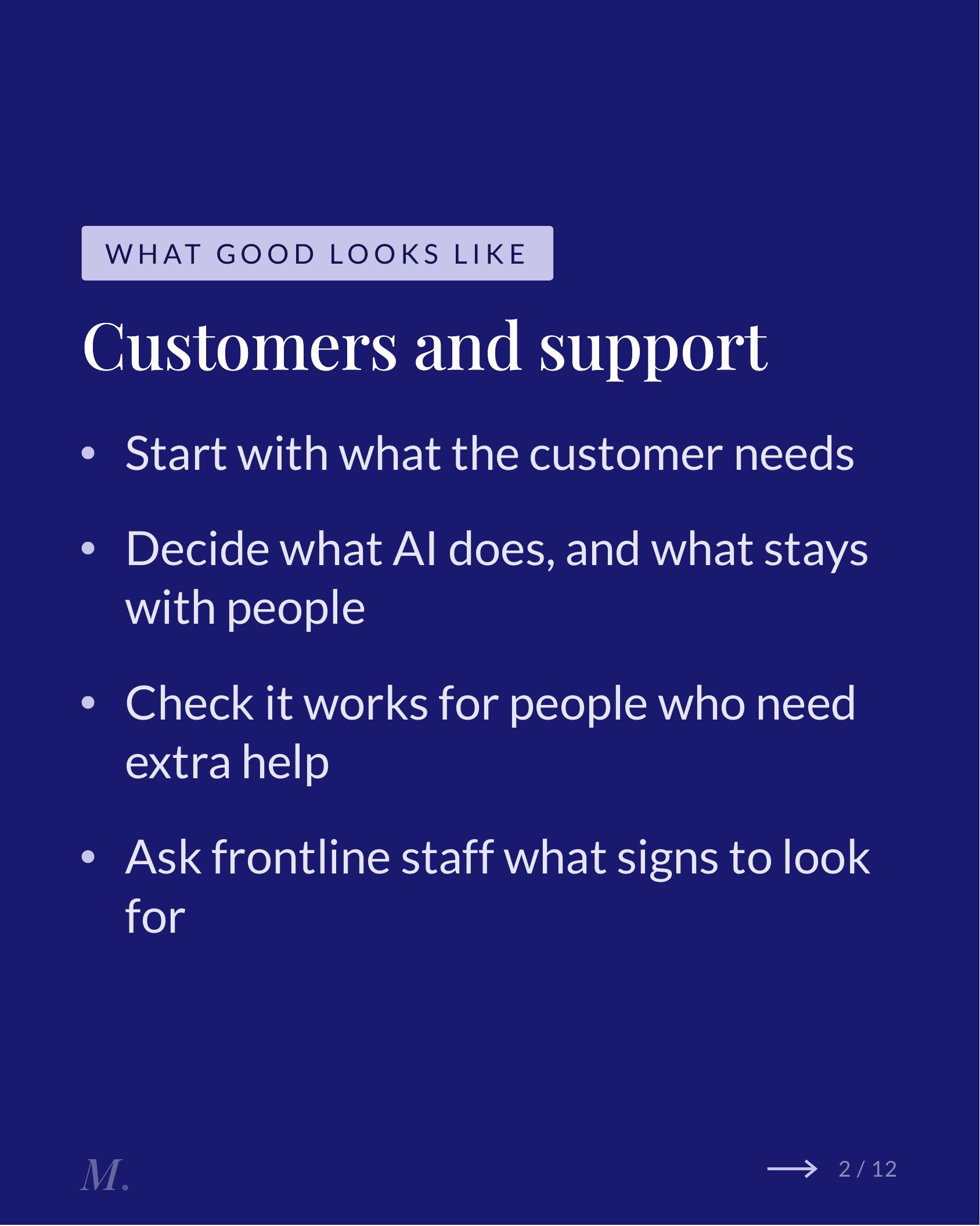
- Customers and support: start with what the customer needs, decide what AI does and what stays with people, check it works for people who need extra help, and ask frontline staff what signs to look for.
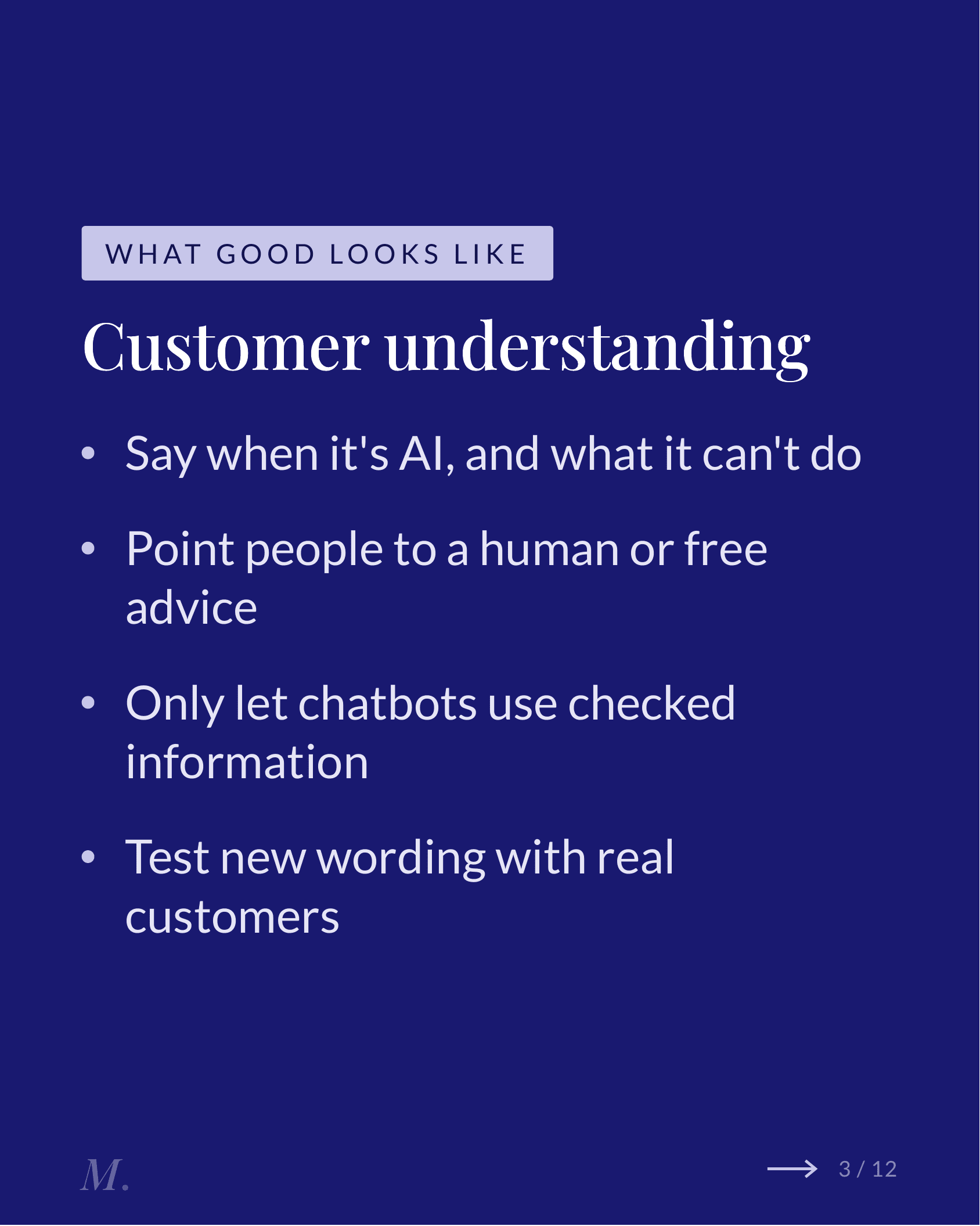
- Customer understanding: say when it's AI and what it can't do, point people to a human or free advice, only let chatbots use checked information, and test new wording with real customers.
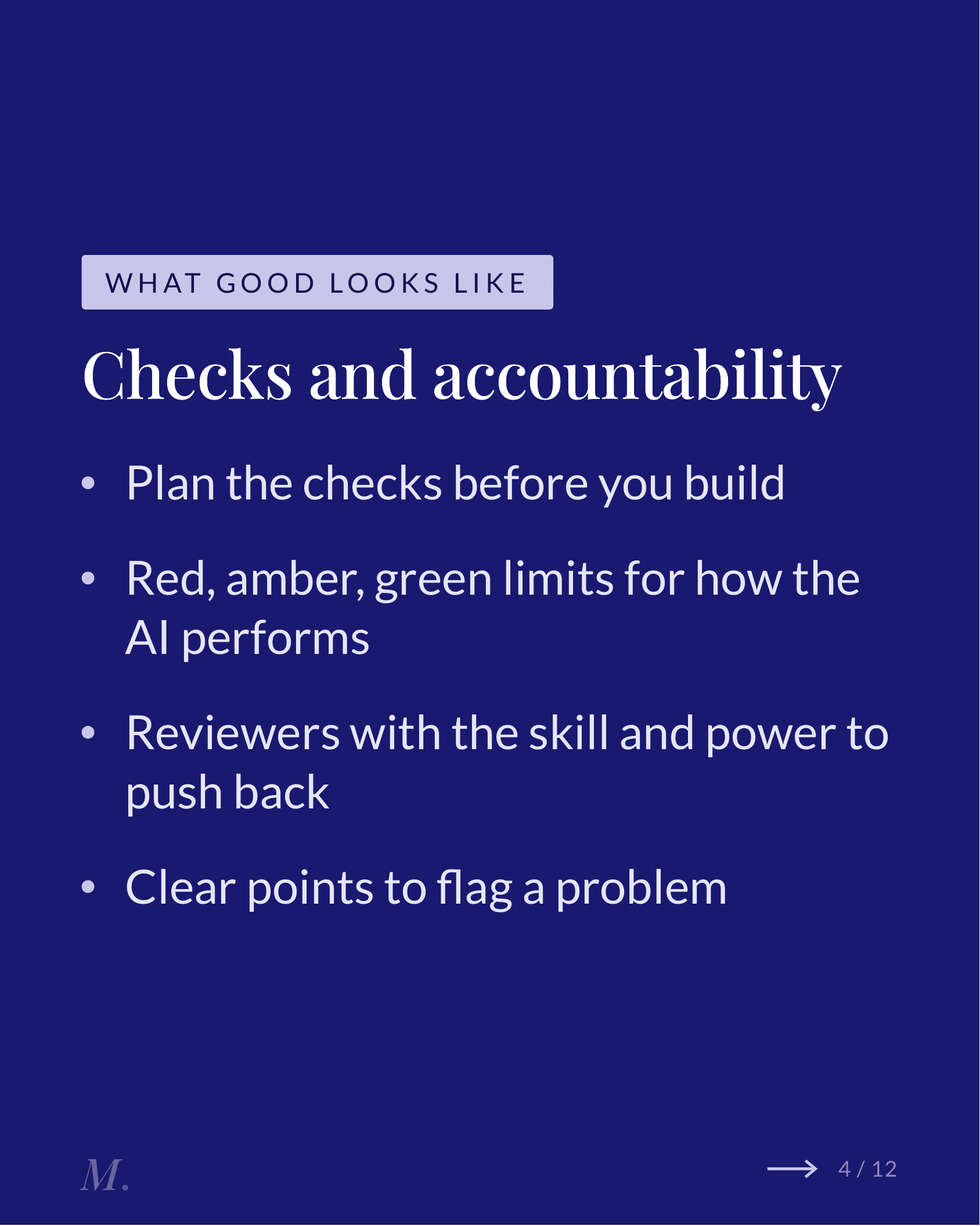
- Checks and accountability: plan the checks before you build, set red, amber and green limits for how the AI performs, give reviewers the skill and power to push back, and have clear points to flag a problem.
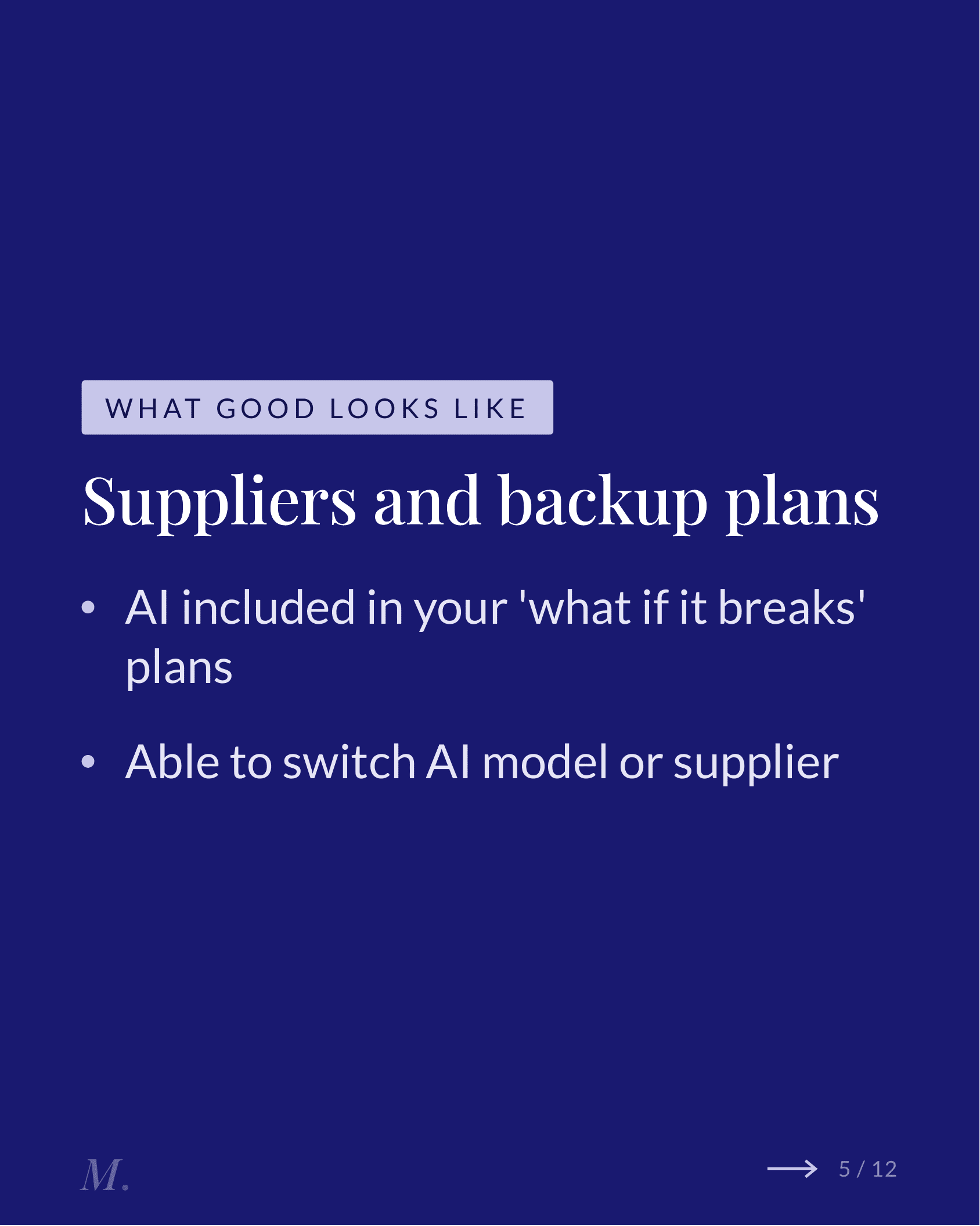
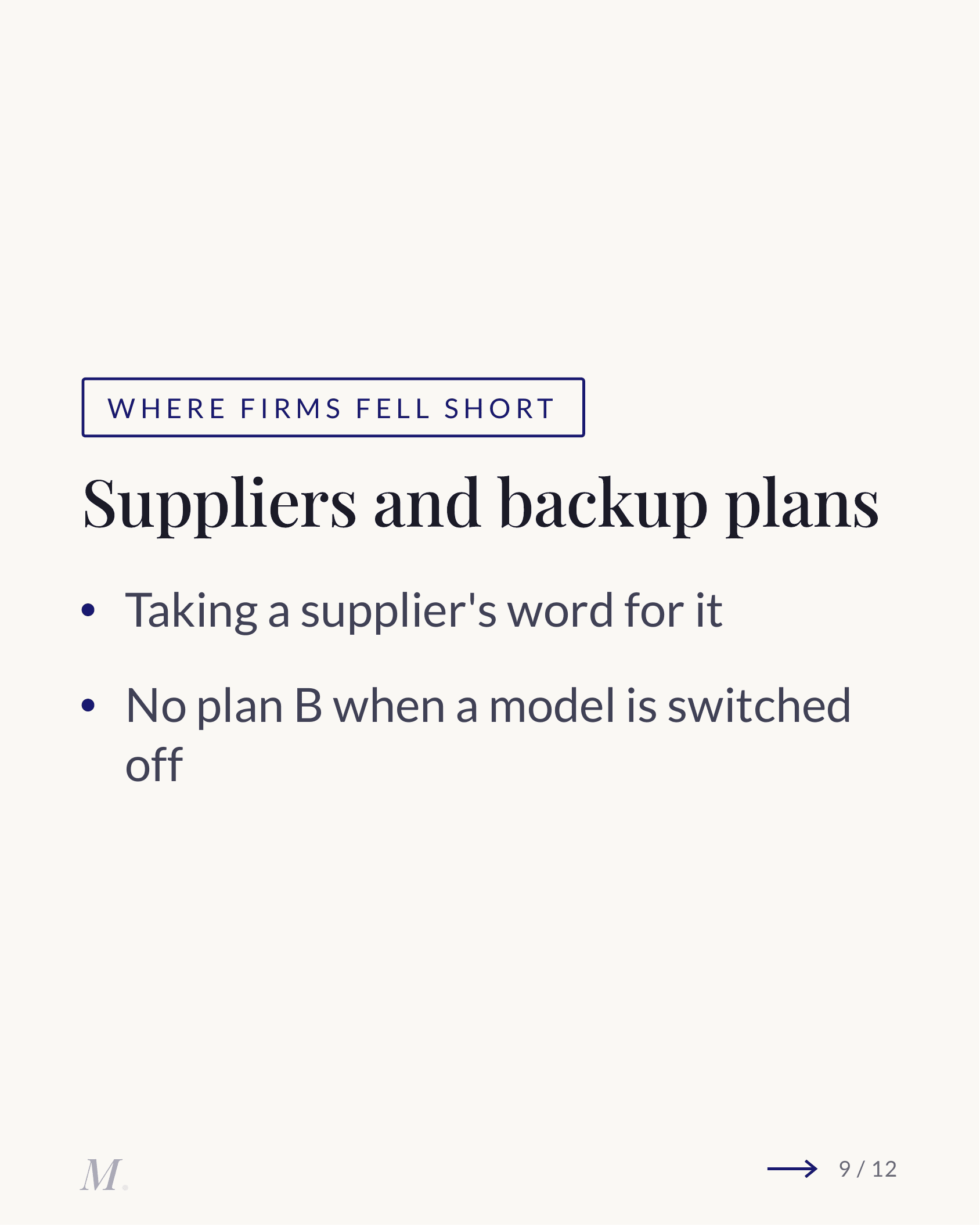
- Suppliers and backup plans: include AI in your "what if it breaks" plans, and make sure you can switch AI model or supplier.
Where firms fell short
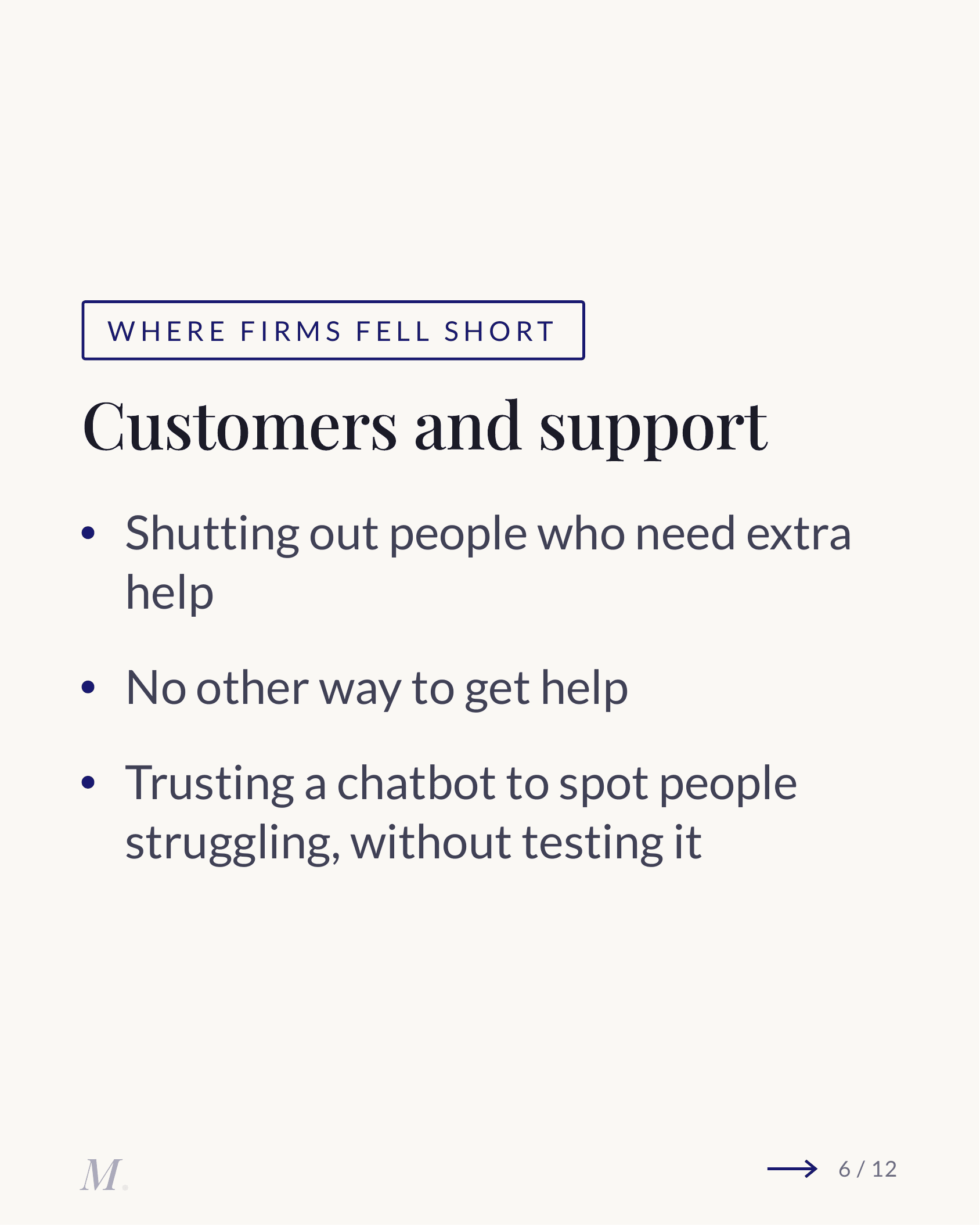
- Customers and support: shutting out people who need extra help, offering no other way to get help, and trusting a chatbot to spot people who are struggling without testing it.
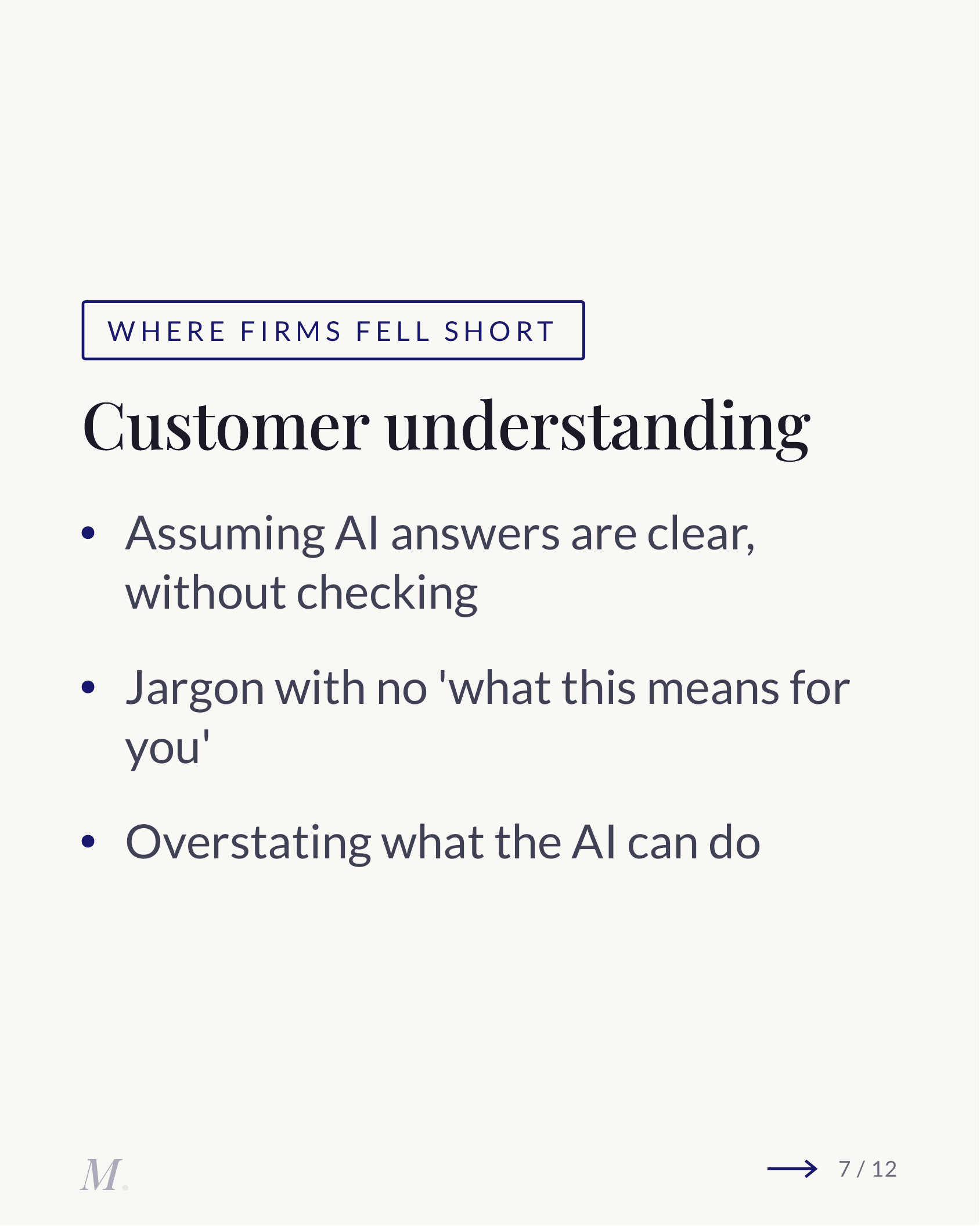
- Customer understanding: assuming AI answers are clear without checking, using jargon with no "what this means for you", and overstating what the AI can do.
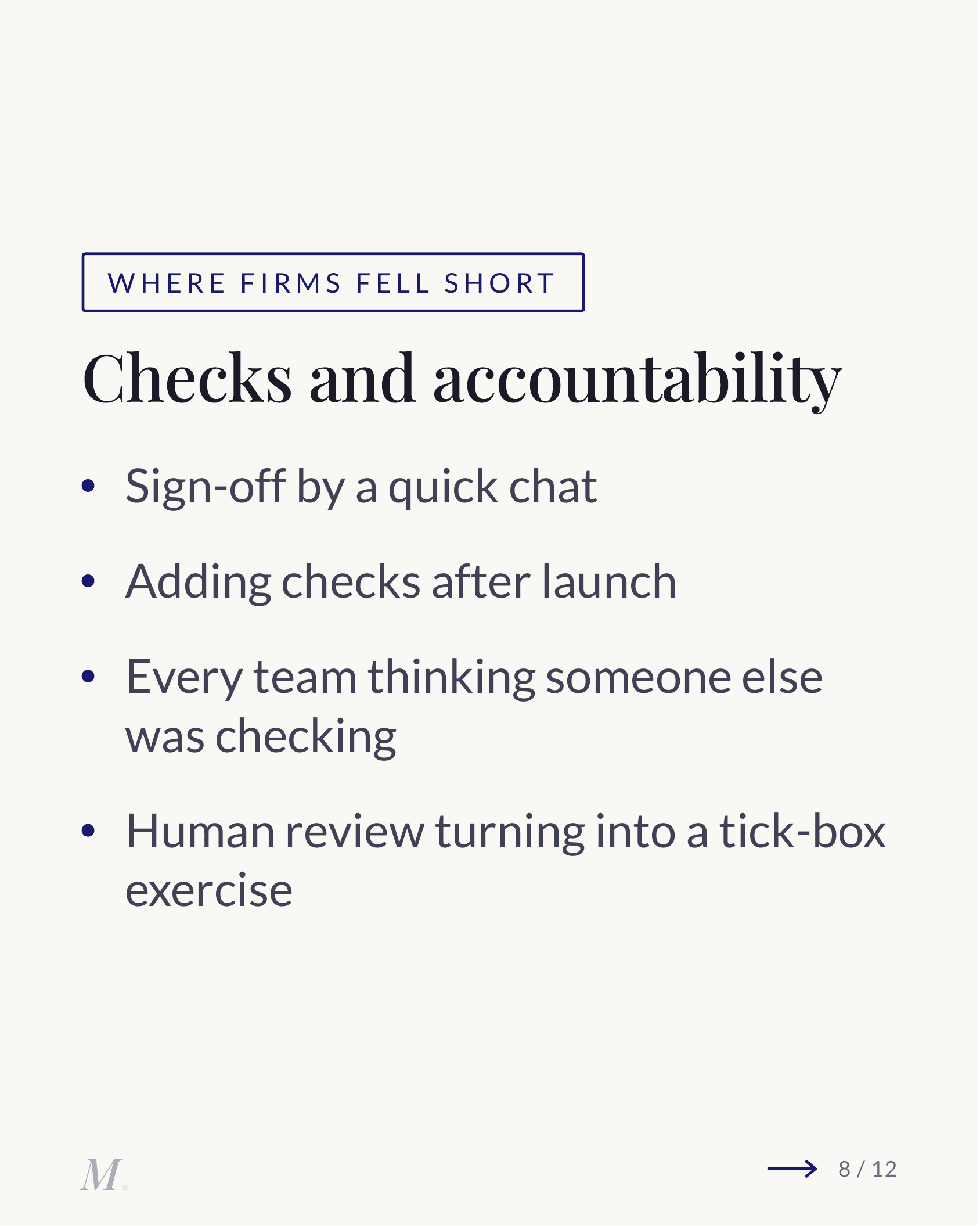
- Checks and accountability: sign-off by a quick chat, adding checks after launch, every team thinking someone else was checking, and human review turning into a tick-box exercise.
- Suppliers and backup plans: taking a supplier's word for it, and having no plan B when a model is switched off.
For smaller firms: keep it in proportion
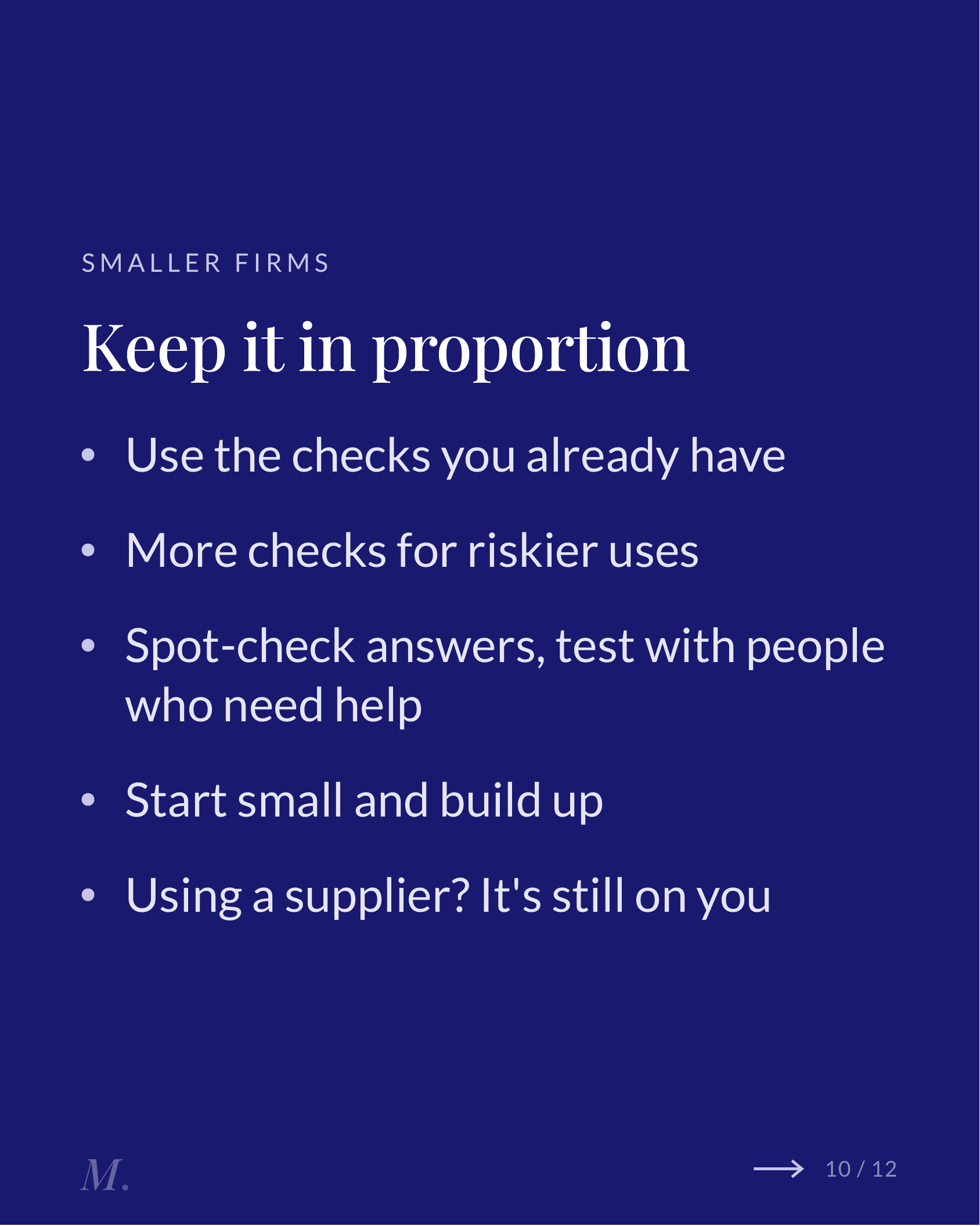
Use the checks you already have, add more checks for riskier uses, spot-check answers and test them with people who need help, and start small and build up. If you're using a supplier, it's still on you.
The baseline: no new AI rules
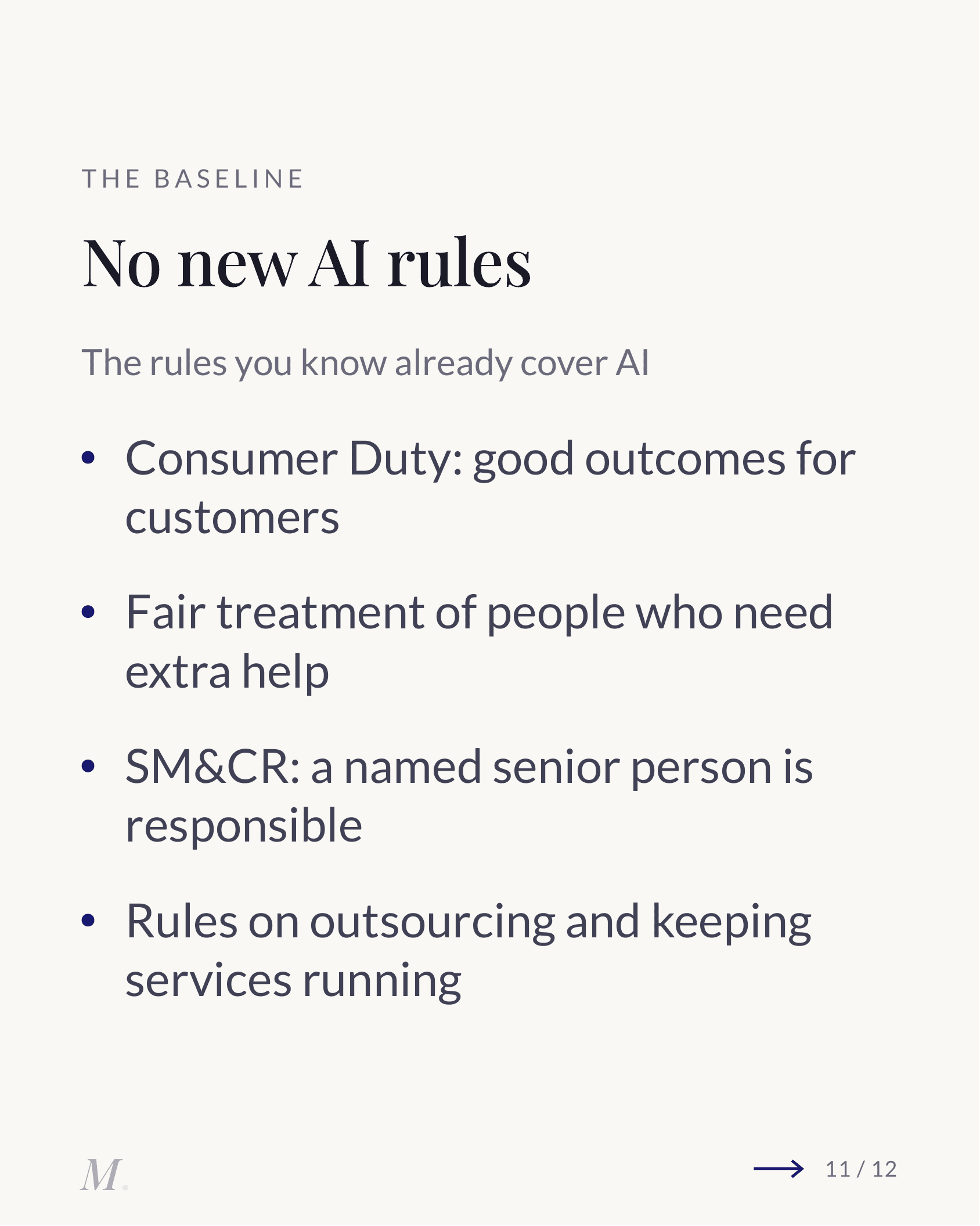
The rules you already know cover AI:
- Consumer Duty, which means good outcomes for customers
- fair treatment of people who need extra help
- SM&CR, which means a named senior person is responsible
- rules on outsourcing and keeping services running
Let's talk
I'm fascinated by how finance and AI will keep evolving, and I'd love to connect and chat with others who are too.
Related reading
- The FCA's financial inclusion remit: why the words matter
- FCA targeted support, from the customer outcome
- The FCA's vulnerability review
- The FCA's Consumer Duty investigations and fair value
- Consumer Duty
- FCA vulnerable customers
Sources
- FCA, AI in financial services: good practice and areas for improvement, published 19 October 2026.
I'm Megan. I care about making finance and women's health work better for people. I help regulated firms design customer experiences and decide what AI should automate and what stays human, so customers get measurably better outcomes.