What should stay human when you automate customer journeys?
More firms are looking at where automation and AI could fit into their customer journeys. I get it. There's a lot of pressure to cut costs and speed things up, and some steps really are better done by a machine.
But I think the useful starting point is a bit more boring than picking a tool. Go through the journey step by step and decide what can be automated and what needs a person.
Why I keep coming back to vulnerable customers
That decision matters most for customers in vulnerable circumstances.
The FCA's guidance on the fair treatment of vulnerable customers, FG21/1, describes a vulnerable customer as someone who, due to their personal circumstances, is especially susceptible to harm, particularly when a firm is not acting with appropriate levels of care. It groups the drivers into four areas: health, life events, resilience and capability.
The bit I find most useful for automation is what it expects firms to do. Firms should respond to customer needs through product design, flexible customer service and communications. And they should monitor whether those needs are being met.
So an automated step is still part of your customer service. It has to flex too.
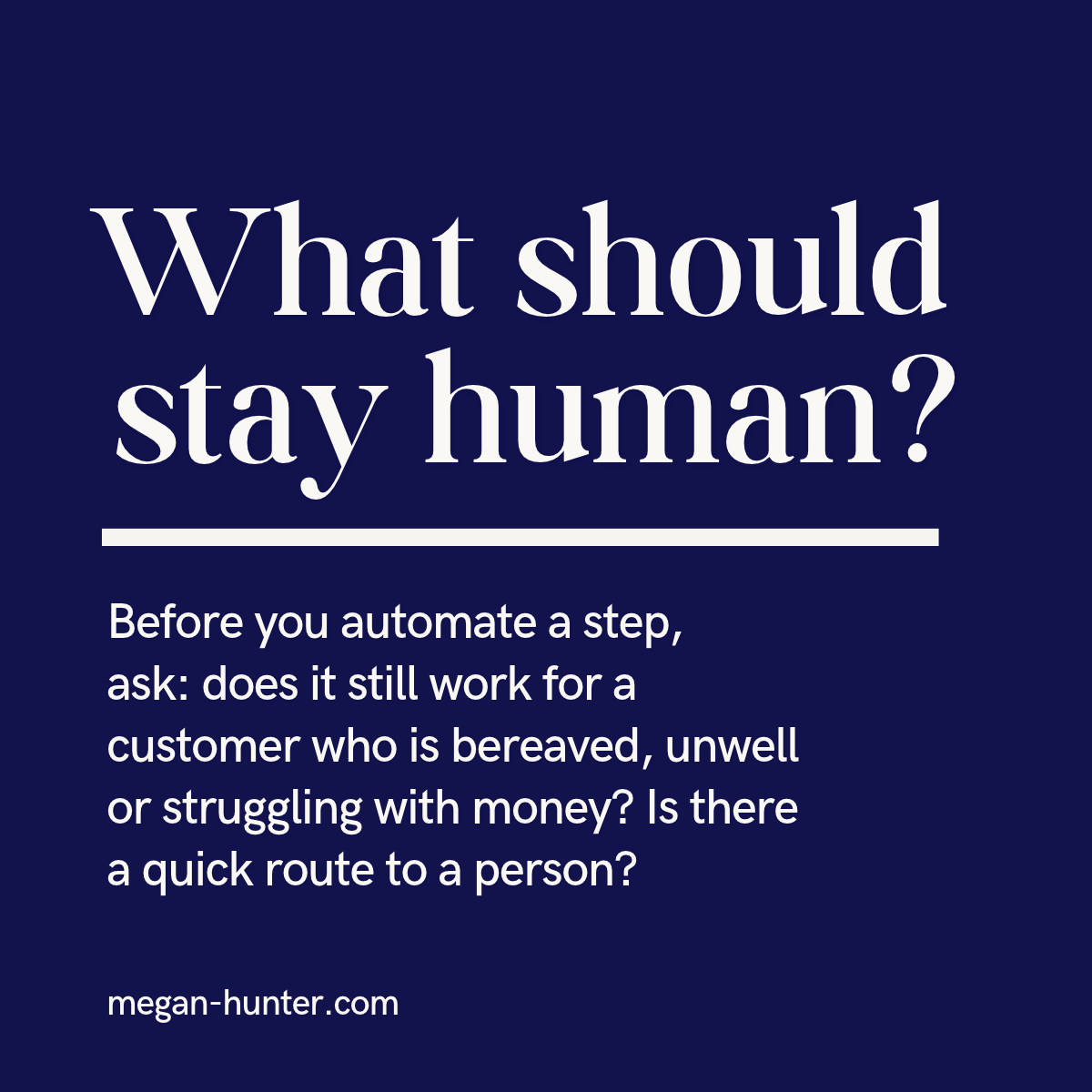
A simple test before you automate a step
Here's the test I'd use. Pick the step you want to automate and ask two questions.
First, if a customer is recently bereaved, unwell, or struggling to manage money, does this step still work for them?
Second, is there a clear, quick route to a person?
If the answer to either one is no, fix that first. Then automate.
What I'd look at when walking the journey
When I go through a journey with this in mind, these are the things I check at each step:
- Can someone tell you about their circumstances here, and does anything change when they do?
- If the bot or form doesn't understand them, where do they end up?
- How long does it take to reach a person, and is that route easy to find?
- Would you know if this step was going wrong for some customers?
That last one ties back to the monitoring part of FG21/1. Designing a step well once won't cover you. You need to keep checking the outcomes, especially for the customers most likely to struggle.
I'm not against automation. Used well, it can free your team up for the conversations that need a person. I just think that choice should be made on purpose, one step at a time.
If you want to read the guidance yourself, it's here: FG21/1, Guidance for firms on the fair treatment of vulnerable customers.
I also post about this kind of thing on the Megan Hunter Consulting LinkedIn page. This article started as this post.
I'm Megan. I care about making finance and women's health work better for people. I help regulated firms design customer experiences and decide what AI should automate and what stays human, so customers get measurably better outcomes.